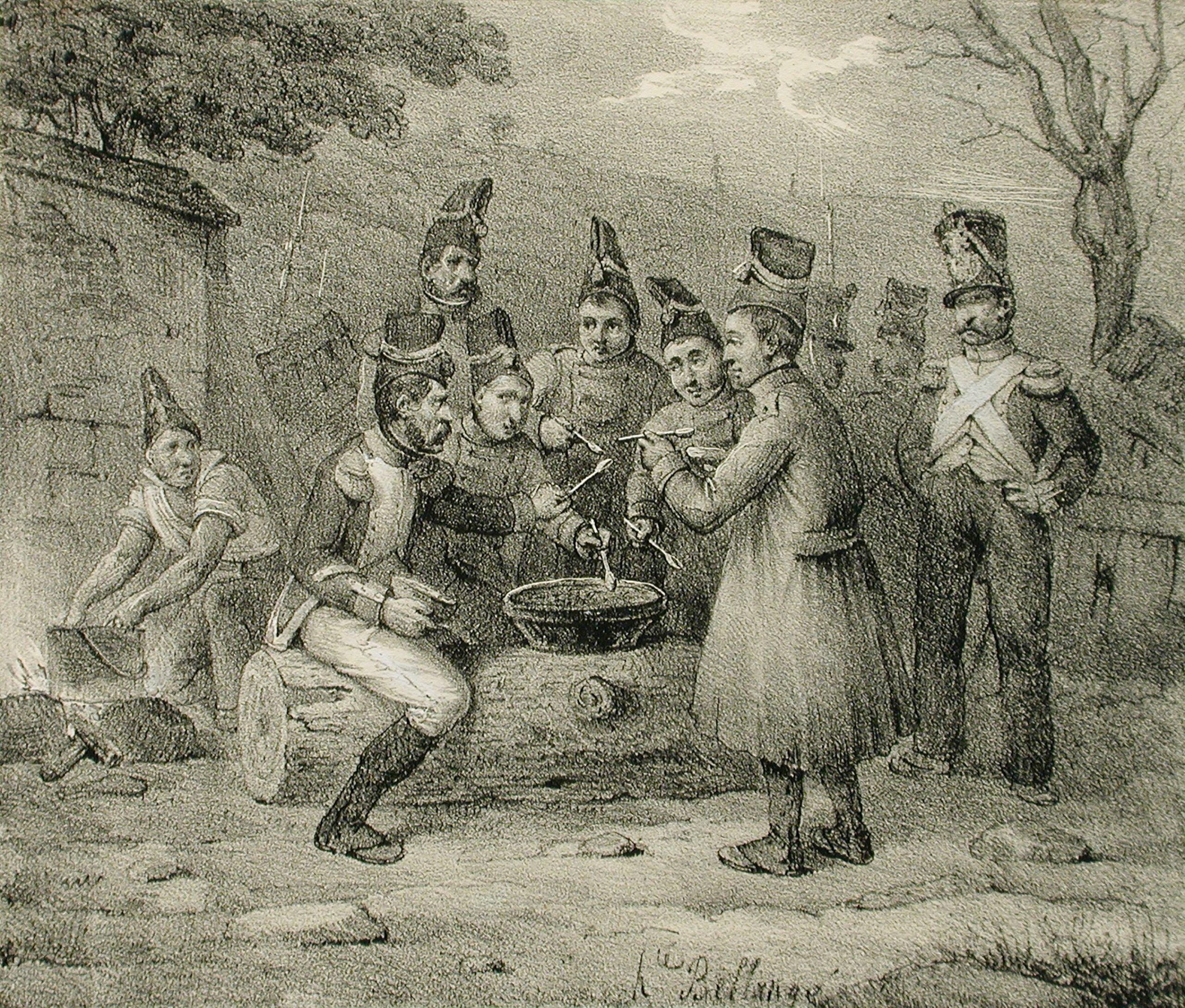
“The army marches on its stomach“. This phrase, which many attribute to Napoleon himself, is very true: feeding the troops is one of the most basic needs of any army.
On 1810, Spanish soldiers had a daily right to “ammunition bread” but had to pay for the rest of the food with part of their salary – about 2 euros per day today.
Obtaining or having enough flour was therefore the main need for the quartermasters. According to the Quartermasters’ Manual by Tomás González Carvajal, from 1809, the bread had to be neither too good nor too bad, well cooked and nutritious. In both the Spanish and French Quartermasters’ Manuals, much attention is paid to controlling the good quality of the bread. The production was carried out in the barracks themselves or in the towns through which the army passed.
In case of a shortage, the author of the manual recommended replacing it with biscuits. This type of food was made with water, flour and salt, without yeast, with a double cooking to eliminate the moisture and allow it to be stored for a long time. This double cooking gives rise to the word “biscuit” or cooked twice. Most armies used this bread substitute, both on land and in the navy.
The rest of the food, as we have already said, had to be bought or obtained by the soldiers. Merchants, farmers or villagers were usually authorized to enter the barracks to sell their food. Legumes and vegetables, potatoes and rice, and, rarely, meat or bacon were cooked all together with those of their comrades. According to González Carvajal, 2 ounces (60 gr) of bacon and 4 ounces (120 gr) of “menestra” (legumes, rice, etc.) per head, make a “pleasant and substantial” stew.
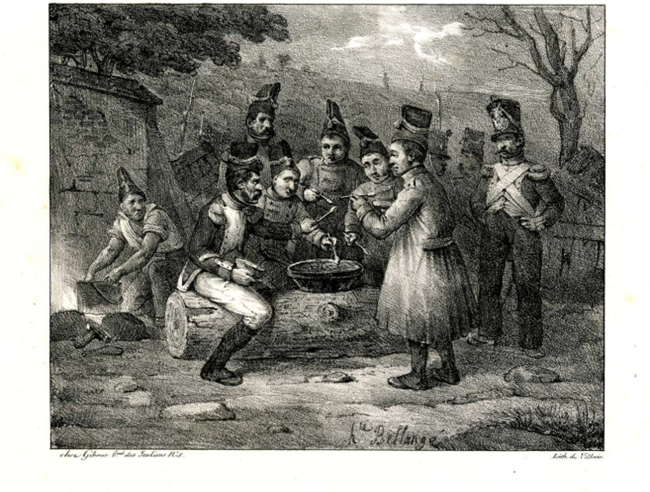
These foods were cooked collectively by the squads. If they were on campaign or did not have plates and bowls, the soldiers all ate from the pot – what the French call “à la gamelle”, following a strict order to provide themselves with a spoonful of stew.
The Intendency became quite complicated in times of war or campaign. The transport of large quantities of food, both for men and horses, was very difficult and the supply had to be carried out largely on the ground. The intendant had to inform himself in advance of the possibilities that the towns and cities through which the army would move could offer. Fair treatment of the population, paying for what was necessary, facilitated the stay of the troops.
It was common for soldiers to be housed in private houses during the campaign. In these cases, they had the right to request:
“Solo cama, luz, agua, aceyte, vinagre, sal y asiento á la lumbre.” (Prontuario, page 9)
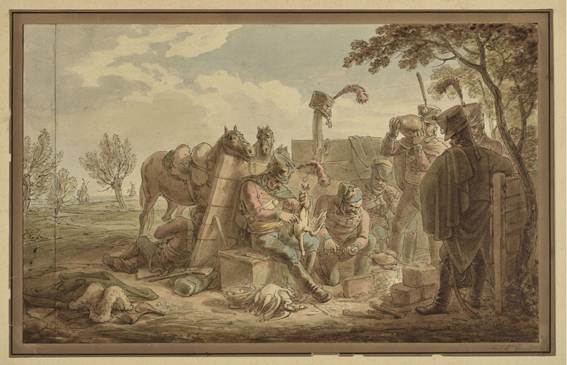
On campaign, the soldier had to be provided differently. They received what they called etapa which we could compare to the combat rations distributed by armies today. Although in other nations, this used to include meat and wine, González Carvajal advises against it. He argues that the frugality of the Spanish soldier is one of his virtues and that excess wine is not advisable either, therefore he recommends keeping bread as a base, complemented by biscuits, cheese and brandy on forced marches or in combat:
“Las raciones son de á quatro onzas en la galleta, de á dos en el queso, y de á dos en el aguardiente,…” (González Carvajal, page 42)
Naturally, despite being in pain, the soldiers tried to “enrich” their diet with what they could gather.
A curious fact is the introduction, at that time, of gazpacho as an extraordinary food provided by the army. It was basically made with bread and vinegar.
After a victory, the general rewarded them with meat and wine, paid for by the army. Surely the soldiers preferred that to any medal!