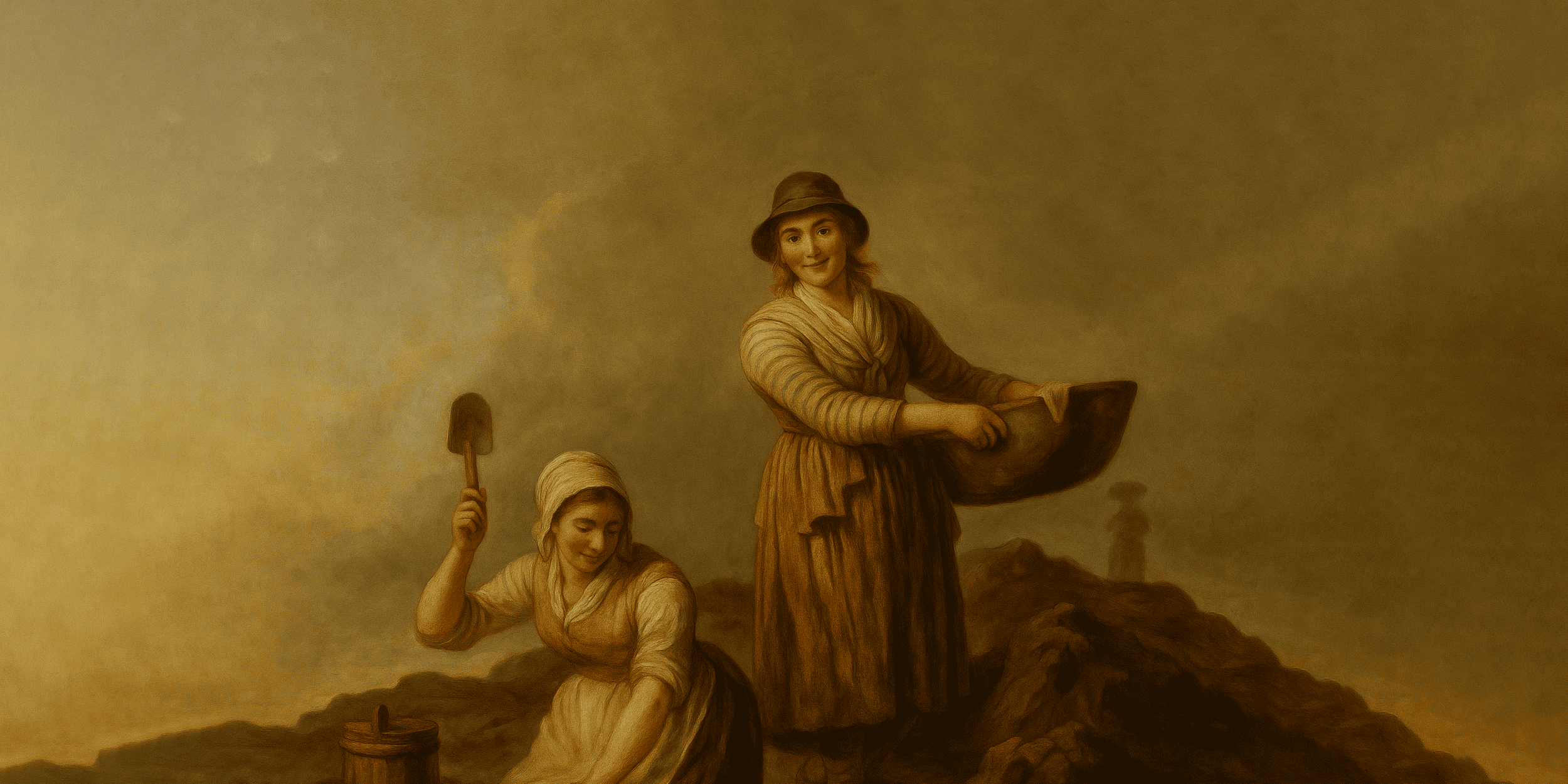
Except for the first three years of revolutionary France, women were not admitted to the armies as soldiers and rarely as companions. If they were, they had to make do, cooking, washing and sewing clothes and getting food from the places they passed through.
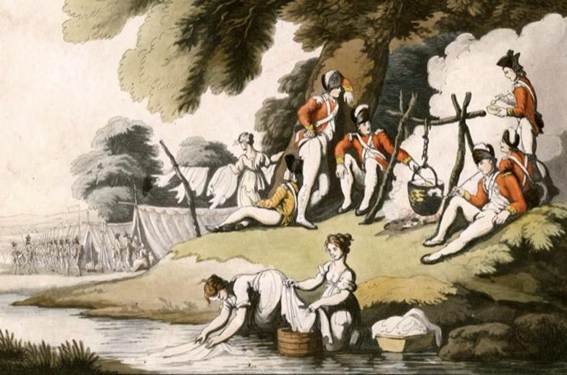
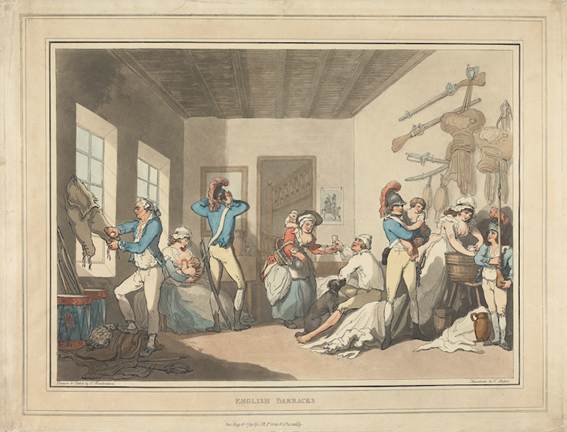
In Great Britain, with a mostly professional army, the number of married soldiers was higher. Single men had to receive the colonel’s consent to marry and authorizations were very limited. Wives received half rations and could live with their husbands and children in the barracks, but sharing the same space as all the other soldiers in the company. Soldiers’ wives, in addition to their work for their families, had to wash and sew the sergeants’ clothes, and the sergeants’ wives, that of the officers. They usually also sewed and washed for other soldiers in exchange for a small compensation. For all women, getting married meant becoming part of the regiment, with its advantages but also its disadvantages. The military hierarchy, the discipline, the lack of privacy… affected them all.
When going on a campaign, the number of wives allowed to embark with the regiment was 6 per company. The rest were given a small amount so that they could return to their homes. Then they were left without further help. For those who were authorized, the living conditions were as harsh or harsher than those of the soldiers.
In France, a decree of 1793 and another of 1809 limited the female presence to women enlisted as vivandières or cantinières and their number corresponded to approximately 1 woman for every 170 men. They were considered part of the army and received a subsistence allowance. They were given a plaque or medal, with a number, and a record was kept of them. In the imperial army they were usually the wives of a non-commissioned officer. Preference was given to married women with men belonging to the regiment. When their husbands died, they usually kept their jobs as regimental widows.
On the contrary, in Spain women were not accepted as part of the army. Soldiers could only marry with the consent of their superiors, if they did not want to incur a punishable crime:
“P. Qué pena tiene el Soldado que ha contraido obligacion de casarse sin permiso de su Xefe?
R. La de ser destinado á uno de los Regimientos fixos de Orán ó Ceuta , y servir en él seis años.” (Prontuario, pàg. 65)
The governors of the place had the power to decide whether wives were accepted into the barracks, but it was very rare. Probably in Hostalric they were not.
When the regiments left for the campaigns, some women followed their men without authorization, but most stayed at home waiting for the unlikely arrival of financial help from their husbands. The widows and daughters of the fallen received some extraordinarily meager pension.
Most armies dragged along civilian men and women who offered services to the troops. Makeshift taverns, under awnings or haylofts, provided a little extra food or a glass of wine or brandy to forget the hardships of war. Naturally, prostitution was also part of it. Although it was not authorized, it was tolerated by the authorities.
Unfortunately, as in all wars, women had to suffer the excesses of enemy troops and even friendly ones. The armies tacitly prohibited this behavior, as reflected in the Spanish manual:
“P. Qué pena tiene el que forzare muger honrada , casada , viuda , ó doncella?
R. Será pasado por las Armas.”(Prontuario, pág.65)
But control of the troops, especially after a bloody battle, was not always possible or, sadly, was not the priority of the commanders. Looting and rape were part of the disasters of war.
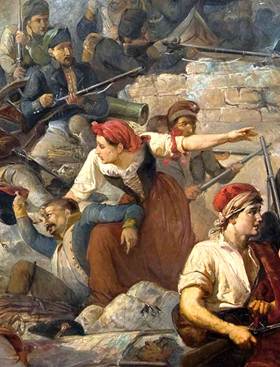
But some women did participate directly in the fighting. A notable example is the Company of Santa Bàrbara, a unit of 200 women that was organized in Girona during the siege of 1809, and that participated by providing ammunition and aid to the soldiers. In other cases, in other besieged towns, such as Zaragoza, although not in such an organized way, many women carried out these tasks of stewardship and aid and even took up the weapon of a fallen soldier to defend their home.